Can Your Food Cravings Reveal Your Baby’s Gender?
So you’re pregnant and the question is already driving you a little crazy: boy or girl? While you’re waiting for the 20-week scan, it’s tempting to look for clues everywhere. The shape of your bump, your skin, your hair — and maybe most of all, what you’re eating. Because that sudden obsession with chocolate has to mean something, right? Or that bag of chips you demolished at 10pm?
Between 50 and 90% of pregnant women experience food cravings, especially in the first trimester. So it makes sense that all kinds of stories have built up around what those cravings are supposedly telling you about your baby’s gender. But is any of it actually true?
The Classic Theory: Sweet = Girl, Salty = Boy
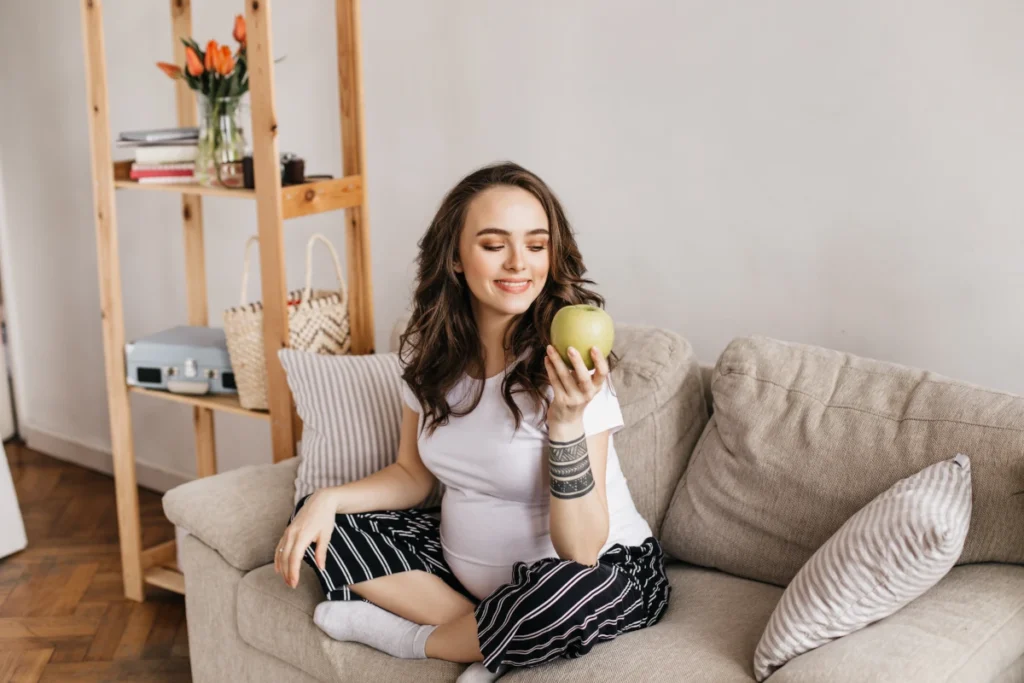
This is probably the most well-known old wives’ tale in pregnancy. Craving chocolate, fruit, dairy and ice cream? Must be a girl. Can’t get enough of chips, meat, cheese and savory snacks? There’s a boy in there.
If you’re carrying a girl, the story goes, you’ll reach for things like chocolate, citrus fruits, orange juice, milk and other dairy products. Pregnant with a boy? You’ll supposedly be craving meat, beans, nuts, cheese, peanut butter and spicy sauces.
Sounds familiar maybe. But there’s no scientific basis for any of it. Cravings are driven by hormonal changes and nutritional deficiencies — not by whether there’s an X or Y chromosome involved. Craving fruit? Probably a vitamin C deficiency. Can’t stop thinking about chocolate? A dip in dopamine. The fact that you end up having a girl is pure coincidence.
One interesting footnote though: one study found that slightly more pregnant women craved salty foods than sweet ones. And globally, slightly more boys are born than girls — 105 to 100. That might seem to back up the old wives’ tale, but it’s just a coincidence.
So Why Are Cravings So Strong?
Before getting into what science actually says about gender, it’s worth understanding where cravings come from in the first place.
The first explanation is fairly straightforward: your body is asking for something it needs. You see a bag of chips, but your body sees a source of sodium. Craving ice cream or cheese might point to a calcium deficiency. Wanting meat could mean your iron levels are low. Suddenly obsessed with bananas or potatoes? Could be potassium. And chocolate has a chemical effect beyond just the taste — it triggers dopamine, and your brain genuinely needs that sometimes when hormones are all over the place.
The second explanation is those hormones themselves. Estrogen and progesterone rise significantly during pregnancy and are also linked to PMS cravings. If you always wanted certain foods before your period, you’ll probably recognize that same pattern during pregnancy. Serotonin, which helps stabilize your mood, influences the need for comfort food when hormones are shifting. And dopamine gives you that satisfied feeling once you’ve finally given in to a craving.
So cravings are both biological and emotional. They say something about your body and your hormones — but not about your baby’s gender.
What Does Science Actually Say?
Here’s where it gets interesting. Because while sweet vs. salty cravings tell you nothing about gender, there is research pointing to a connection between your overall calorie intake and the likelihood of having a boy or a girl.
In 2003, Harvard researchers published a study in the British Medical Journal following 244 pregnant women and analyzing their eating habits. Women carrying boys were eating around 200 more calories per day than women carrying girls. Not just more calories overall, but more protein, more carbohydrates, and more fat. The researchers’ theory: the male fetus sends signals that push the mother to eat more, possibly through testosterone produced by the fetal testes. Boys are, in other words, more demanding even before they’re born.
In 2008, the University of Exeter went a step further. They followed 740 first-time pregnant women and had them keep detailed food diaries, both before and during early pregnancy. Women who consumed the most calories before conception had a 56% chance of having a son, compared to 45% for those with the lowest calorie intake. Women who ate breakfast cereal every day were almost twice as likely to have a boy. Higher intakes of potassium, calcium and vitamins C, E and B12 also correlated with male births.
Important detail: this link only applied to diet around the time of conception, not to what women ate during pregnancy itself.
What Does That Actually Mean For You?
Honest answer: not that much. Gender is determined at the moment of conception and depends on which sperm cell reaches the egg — X for a girl, Y for a boy. What you eat afterwards doesn’t change that.
What the research does suggest is that male fetuses place higher energy demands on their mothers. If you feel noticeably hungrier than you’d expect, that could be a hint — but it’s not proof of anything. And a calorie-rich diet before conception seems to slightly increase the odds of having a boy, though the difference is modest.
Cravings for sweet or salty foods? Those say nothing about gender, but they do say something about what your body needs right now. That’s probably the most useful takeaway from all of this.
What To Do With Those Cravings
It’s tempting to just go with every craving, but eating a balanced diet still matters. Too much sugar or too much weight gain increases the risk of gestational diabetes.
A few practical things that actually help: satisfy cravings in smaller amounts rather than going all in. Eating smaller meals more often keeps your blood sugar more stable and takes the edge off the worst cravings. And look for healthier alternatives where you can — craving a milkshake? Try a kefir smoothie. Want chips? Rice cakes with hummus can scratch that itch. If you have unusual or persistent cravings, it’s always worth mentioning to your midwife.
What About the Other Signs?
Food cravings don’t exist in isolation. Most pregnant women stack them up alongside other supposed clues.
Morning sickness is one of them: women with severe nausea are said to be more likely carrying a girl. And there’s actually a small amount of science behind that one. A 2021 study of more than 4,000 pregnancies found that women carrying a female fetus were significantly more likely to experience nausea in the first trimester. Bump shape — high and wide means a girl, low and pointed means a boy — has no grounding in anything. The shape of your bump depends on your body type and muscle tone, not your baby’s gender. And the baby’s heart rate? Above 140 beats per minute supposedly means a girl. No scientific basis for that either.
The Only Way To Actually Know
If you really want to be sure: wait for the 20-week scan. The gender is often visible from around 16 weeks, but the 20-week anatomy scan gives the most reliable result. If you want to know sooner, NIPT testing is available from around week 10, though it’s primarily used for chromosomal screening rather than gender determination.
Until then? Enjoy the guessing. For a lot of women, that uncertainty and speculation is actually one of the more enjoyable parts of early pregnancy.
Had strong cravings during your pregnancy? Did the old wives’ tales turn out to be right? Share your experience in the comments.
Want to start your preparation and discover even more interesting and surprising pregnancy facts?
Sources
- Tamimi RM, Lagiou P, Mucci LA, et al. — Average energy intake among pregnant women carrying a boy compared with a girl — British Medical Journal, 2003 https://www.bmj.com/content/326/7401/1245
- Harvard Gazette — Pregnant women carrying boys eat more than those carrying girls — 2003https://news.harvard.edu/gazette/story/2003/06/pregnant-women-carrying-boys-eat-more-than-those-carrying-girls
- Mathews F, Johnson PJ, Neil A — You are what your mother eats: evidence for maternal preconception diet influencing fetal sex in humans — Proceedings of the Royal Society B, 2008https://royalsocietypublishing.org/doi/10.1098/rspb.2008.0105
- ScienceDaily — Mother’s Diet Influences Infant Sex: High Energy Intake Linked To Conception Of Sons — 2008https://www.sciencedaily.com/releases/2008/04/080422194553.htm
- Wolfson JA & Bleich SN — Food cravings and aversions during pregnancy — 2015https://ubiehealth.com/doctors-note/which-food-cravings-signal-pregnant-boy-74-guide-x113exp2
- AlphaBiolabs — Can Pregnancy Cravings be Used to Predict Baby Gender? https://alphabiolabsusa.com/learning-center/can-pregnancy-cravings-be-used-to-predict-baby-gender
- SneakPeek — Food Cravings When Pregnant with a Boy or Girl https://sneakpeektest.com/blog/pregnancy-cravings-and-gender/
- Vomiting in pregnancy and fetal sex (2021 study of 4,320 pregnancies) — cited via: https://www.aol.com/20-myths-predicting-babys-sex-200000076.html