
Methodology for gender prediction according to the Mayan calendar
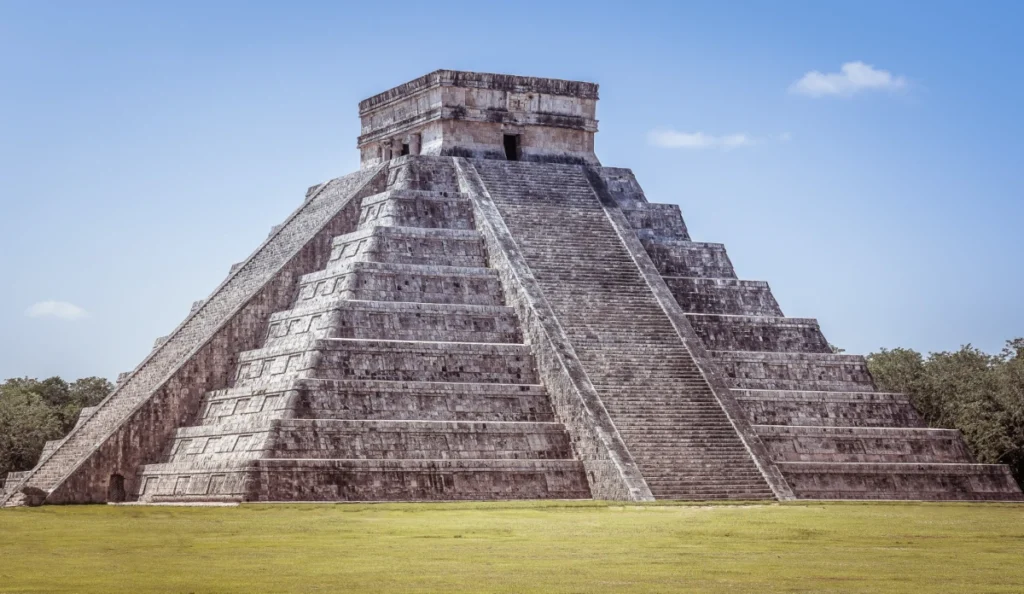
At the heart of the Maya Gender Predictor is the concept of even and odd years, as defined by the Maya calendar system. This rule is based on a simple yet intriguing premise: the numerical nature of the mother’s age at conception and the year of conception—whether these are even or odd.
The Mayan method of gender prediction is fascinating in its simplicity and ingenuity. Here’s a basic explanation of how it works (followed by a more detailed explanation):
- The mother’s age at conception and the year of conception are compared. – If both ages are even or odd, the baby is assumed to be a girl.
- However, if one is odd and the other even, then a boy is predicted.
This method reflects the Mayan belief in the duality and balance of the universe, and embodies their deep connection with the rhythms and cycles of the natural world.
Step by step overview
To apply the Mayan gender predictor today, the principles of the ancient Mayan calendar must be combined with a modern calendar.
For an expectant mother, this method can add an intriguing element to the pregnancy journey. Here’s how to apply it:
- Determining the month of conception: First, determine the month in which conception occurred. In the modern version of this method, we use the Gregorian calendar year (modern calendar).
- For example, if conception occurred in April 2023, then simply: April is the month of conception.
- Mother’s age at conception: Next, consider the mother’s age at conception. For example, if she was 28 when she conceived in 2023, this is the age to use.
- Even or odd? Now determine whether both the month of conception and the mother’s age at conception are even or odd. Continuing with the example above:
- Month = April = 4 = Even
- Age = 28 years = 28 = Even
- Application of the rule: According to the Mayan gender predictor:
- If both the month of conception and the mother’s age at conception are both odd or both even, the prediction is that the baby will be a girl.
- If one is odd and the other is even, the prediction is for a boy.
| Age at conception | Month of conception | Prediction |
|---|---|---|
| Even | Even | Girl |
| Odd | Odd | Girl |
| Even | Odd | Boy |
| Odd | Even | Boy |
More examples
- Scenario 1: An expectant mother was 30 years old when she became pregnant in March 2023. Because 30 is even and March (03) is odd, the Mayan gender predictor suggests that the baby will be a girl.
- Scenario 2: If an expectant mother was 29 years old when she became pregnant in August 2022, then both the age (29, odd) and the month (08, even) will be different in terms of the even/odd classification, indicating that the baby will be a boy according to the Mayan method.
- Scenario 3 (real-life situation): My sister was 24 when she became pregnant with my niece in April 2015.
- Age: 24 / Month: 04 = Both Even = Girl (This was a total hit!)
- Scenario 4 (real-life situation): I became pregnant with my son when I was 26, in January 2017.
- Age: 26 / Month: 01 = Even / Odd = Boy (yay!)
Further explanation behind the methodology – Energetic Balance Theory
Central to the Maya Gender Predictor is the Energetic Balance Theory.
This intriguing concept suggests that a child’s sex depends on the energy balance between the parents at conception. The Maya, with their profound knowledge of celestial movements and natural rhythms, believed that even and odd years in their calendar represented different energy types.
It was thought that these energies, when combined during conception, influenced sexual development. This theory demonstrates how the Maya integrated their advanced astronomical and calendrical knowledge into the intimate aspects of human life.
Their belief in the influence of even and odd years as energy representations reflects a profound connection between cosmic cycles and human existence. The ancient Maya may have integrated aspects of astrology and numerology into this belief system, illustrating their advanced and holistic understanding of the universe.
This connection between ancient astrology, numerology, and gender prediction offers a fascinating glimpse into how the Maya saw the cosmos as intimately intertwined with human life. .
Accuracy
Scientific validation and limitations
It is crucial to contextualize the Maya Gender Predictor within the realm of traditional methods, separate from modern scientific approaches. While this method has a rich cultural and historical background, it lacks scientific support. The most accurate and scientifically reliable method for determining fetal sex remains medical ultrasound.
The lack of scientific evidence for the accuracy of the Maya Gender Predictor is telling. Despite its historical significance and the appeal it holds for many, it is unsubstantiated by scientific studies. The accuracy of this method, measured by scientific standards, often proves to be no better than chance. However, it remains a topic of interest and cultural significance.
Origins in Mayan Culture – Historical Context
The Maya, a civilization known for their astronomical and mathematical skills, flourished in Mesoamerica from approximately 2000 BCE to the early 16th century. Their society was characterized by impressive advances in several areas, including a profound understanding of time and celestial movements.
This ancient culture’s gender predictor, believed to have spiritual and symbolic significance, offers a glimpse into their worldview and societal norms. Read more about the Maya civilization .
In Mayan culture, this method of gender prediction was more than just a folkloric curiosity; it was a tool for critical decision-making. Used in childbirth, parenting, and family planning, it symbolized a deeper connection with their heritage and spiritual world.
The divination device wasn’t just a method; it was a bridge to their ancestors, offering them direction and insight into the mysteries of life. Discover the role of gender prediction in Mayan decision-making .
Mayan calendar and its meaning
The Mayan calendar, a marvel of ancient technology, testified to their advanced knowledge of astronomy. Unlike modern calendars, this calendar was closely linked to celestial events and natural cycles, making it a cornerstone of Mayan life.
They believed the calendar had the power to predict various aspects of life, including the gender of unborn children. This belief stemmed from their vision that time and cosmic rhythms were intertwined with human life, profoundly influencing and guiding it. Delve into the complexity of the Mayan calendar .
Evolution and modern use
Over the centuries, the Maya Gender Predictor has not only survived but also evolved, reflecting the adaptability and enduring fascination of Mayan culture. The journey from an ancient civilization to the modern world is a story of adaptation and resilience.
Renewed interest
The Mayan Gender Predictor has become remarkably popular in recent years. This resurgence is part of a broader trend toward embracing traditional and holistic methods for understanding and interacting with the world. In an age dominated by technology and science, the appeal of ancient wisdom offers a charming contradiction.
People are increasingly drawn to these traditional methods, not only because of their novelty, but also because of the connection they offer with a distant and mysterious past.
In this context, the Mayan gender predictor is more than just a tool for predicting a baby’s sex; it’s a cultural artifact that allows individuals to participate in and celebrate ancient traditions. Learn more about the growing interest in traditional methods of gender prediction.
You know
When expectant mothers use this age-old method, it is important to realize that this is a traditional and cultural practice, and obviously not a scientifically validated method.
For accurate gender determination, medical methods such as ultrasound are recommended. In the modern context, the Maya Gender Predictor serves more as a fascinating cultural legacy and a playful addition to the pregnancy experience than as a serious prediction tool.
source:
https://babygenderpros.com/mayan-gender-predictor/